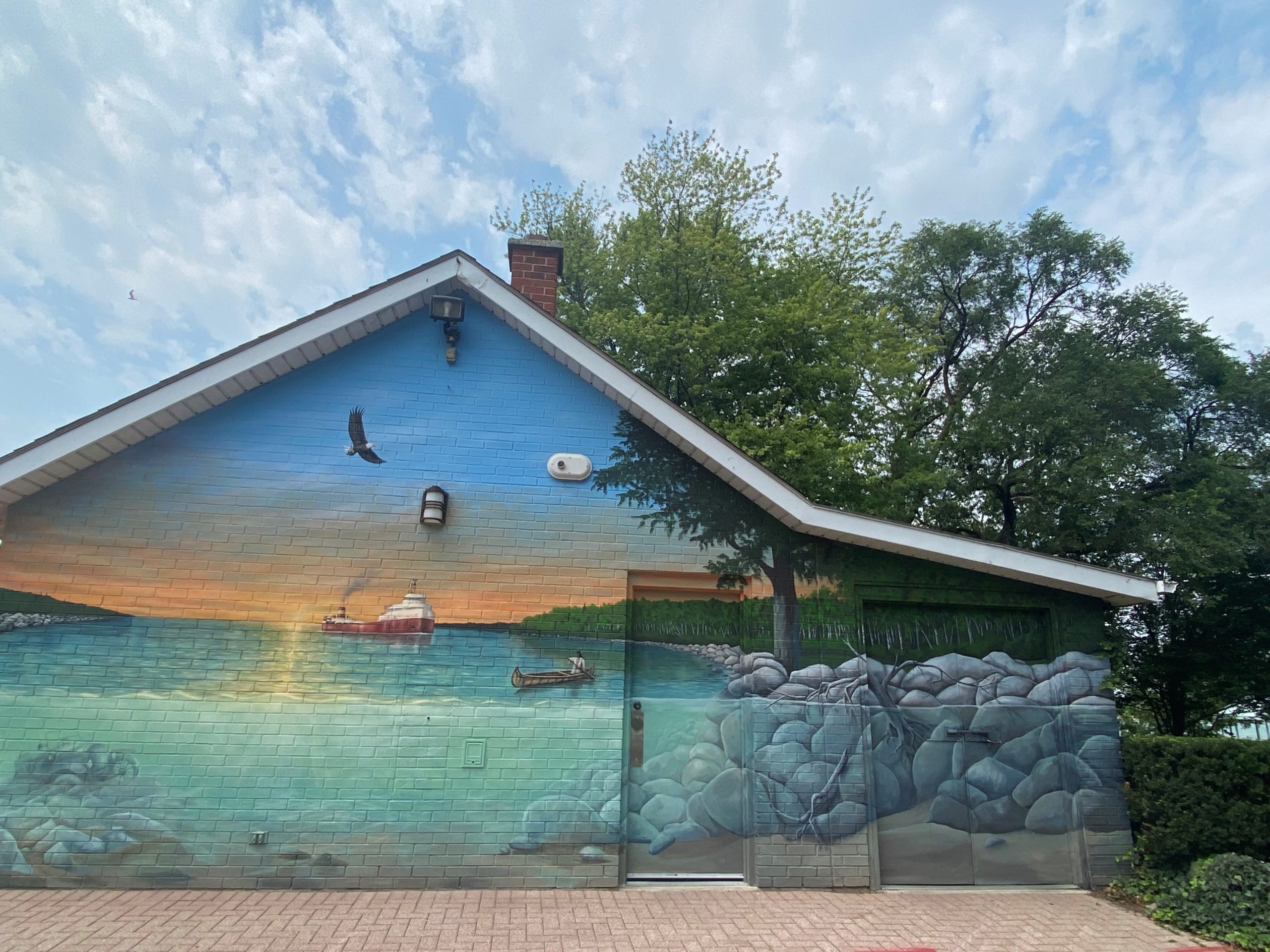
Our River Our Home Mural – Kings Navy Yard Park (252 Dalhousie St)
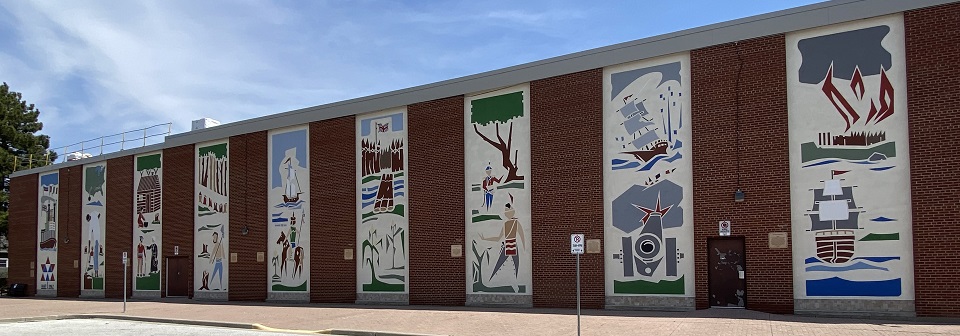
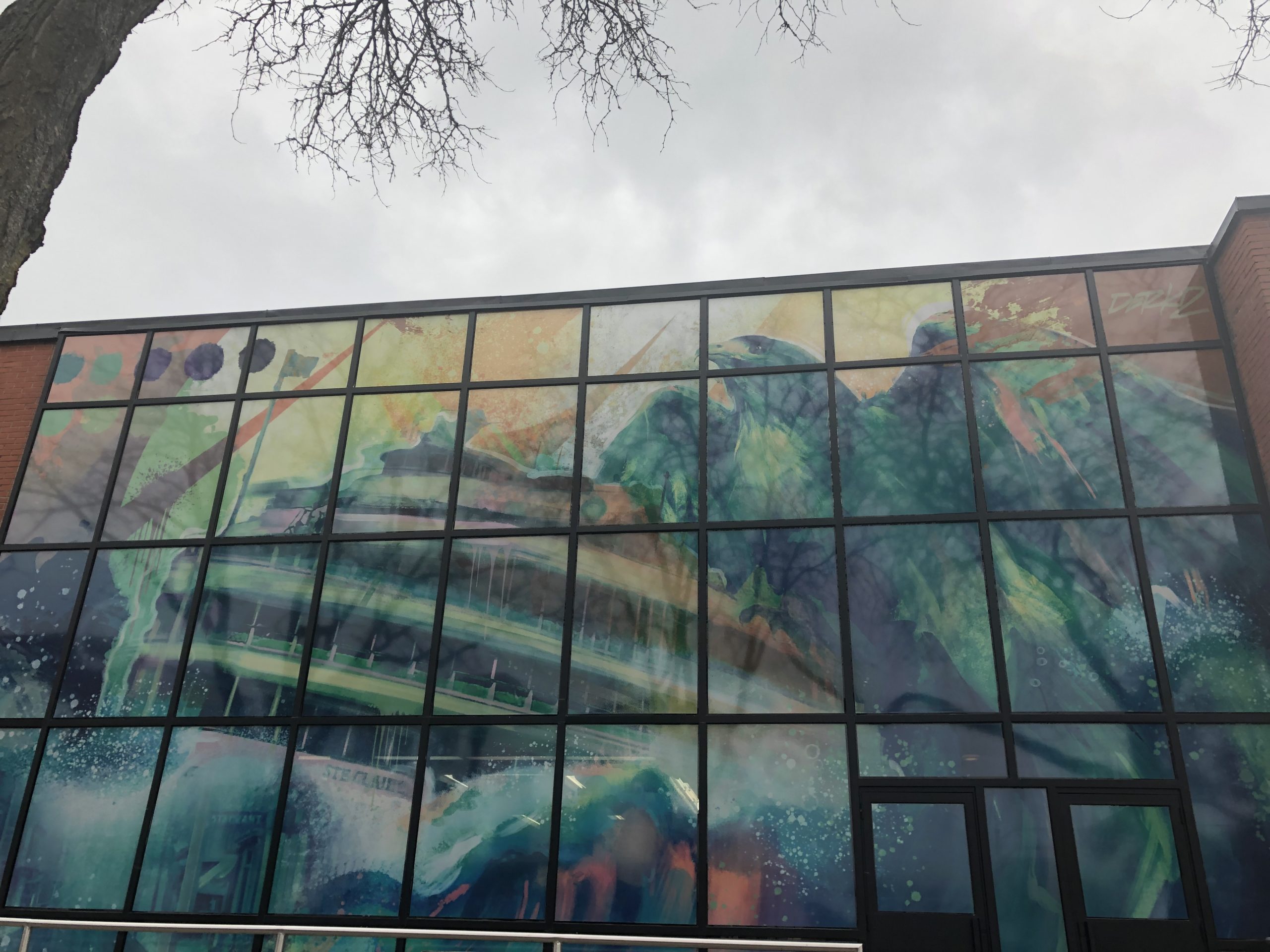
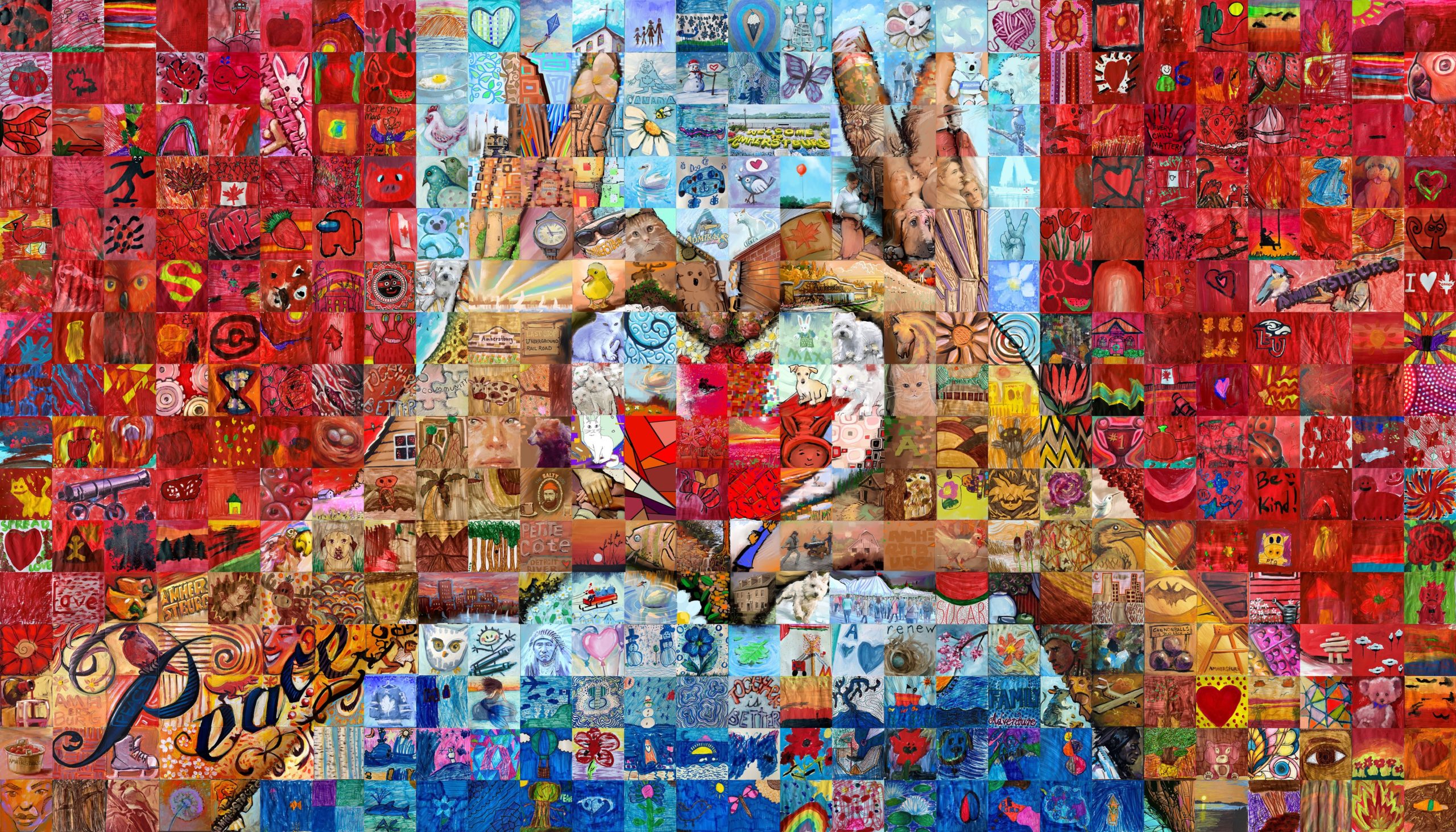
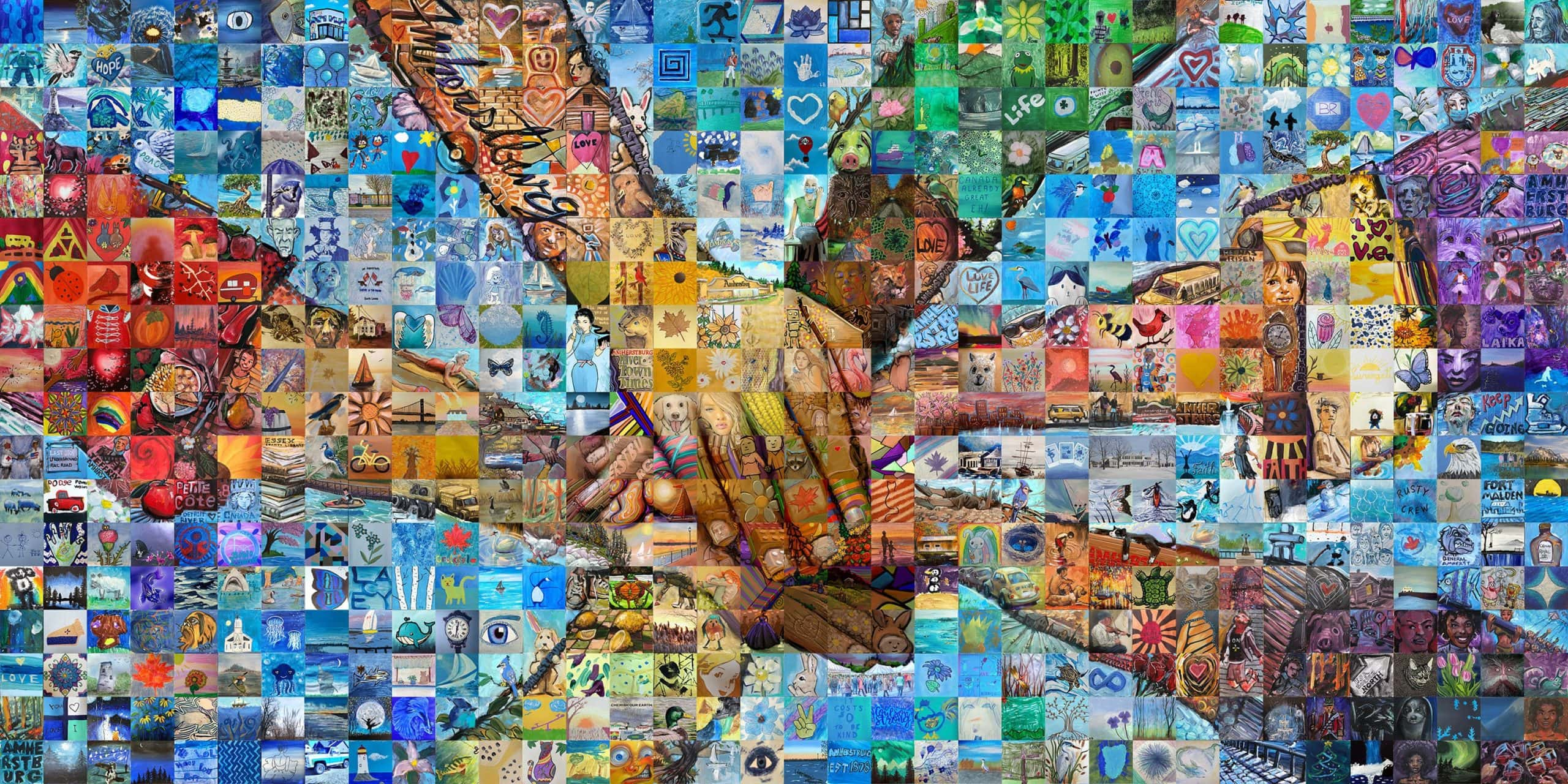
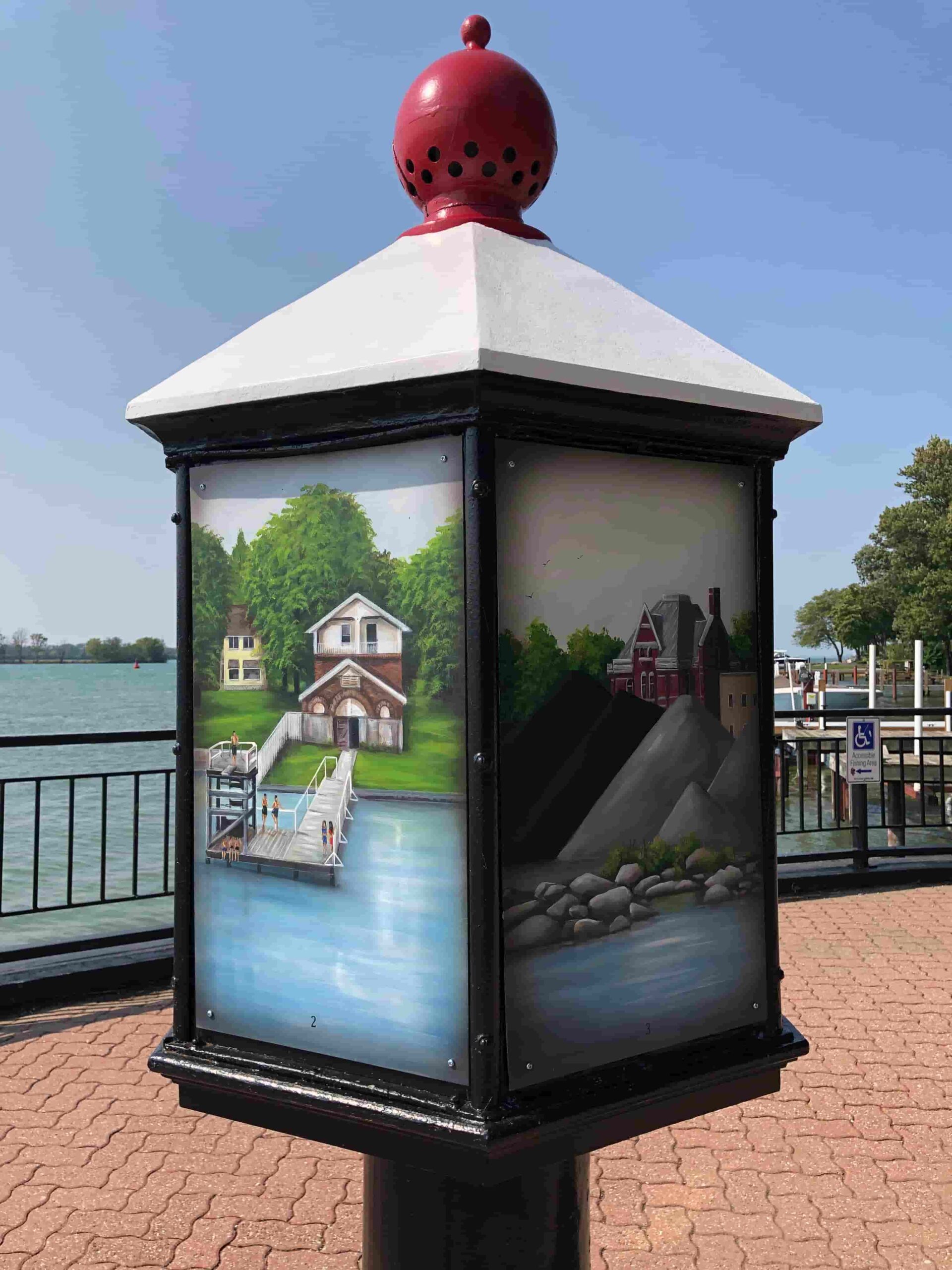
The Natural Heritage and Culture mural above can be found in the King’s Navy Yard Park. It was painted by local Artists Dennis and Dylan White in 2021 and depicts the unique history and wildlife found along Amherstburg’s waterfront.
The Detroit River is one of our most unique natural and cultural heritage features. Always present, the River has been the lifeblood of communities long before European settlement and will continue to be for centuries to come. The River has two very distinct designations; Wildlife Refuge and an International Heritage River shared by both Canada and the United States.
The Detroit River International Wildlife Refuge consists of nearly 6,000 acres of unique habitat, including islands, coastal wetlands, marshes, shoals and waterfront lands, extending along 77 km of shoreline on both sides of the international border.
The Detroit River is a significant continental migration corridor for many wildlife species including fish, birds, bats and insects. Evident in spring, you will witness songbirds moving North through King’s Navy Yard Park or Silver Bass rolling near shore. In the fall you will see Kettles of Hawks high overhead or the constant flutter of Monarch Butterflies winging their way South to Mexico.
This mural depicts the many once abundant species returning to traditional habitats in and along the Detroit River such as Barn Swallows, Bald Eagle, Peregrine Falcon, Otter, Beaver, Lake White Fish, Blue Heron, Green Heron, Canada Goose, Red-tail Hawk, Ring-billed Gull, Lake Sturgeon, Red-ear Sunfish, Snapping Turtle, Pickerel.
The International Heritage River designation identifies the Detroit River as the southern-most Canadian river within our national Heritage River System. It sustained the livelihood of the Indigenous, European settlement and military exploits. The River was a passage for those escaping slavery and the intriguing lawless days of rum-running. Emerging industry, shipping, fishing and fowling were all supported by the River. Today it is the busiest international crossing in North America and plays a huge economic role in the movement of goods and commerce.
This project was made possible by a generous contribution by Richard and Colleen Peddie.